Efektivitas Terapi Bermain pada Anak Usia Dini dengan Tantrum Akibat Ketergantungan Gadget
DOI:
https://doi.org/10.55110/jupemando.v1i2.254Keywords:
Play therapy, Tantrum, Early childhood, GadgetAbstract
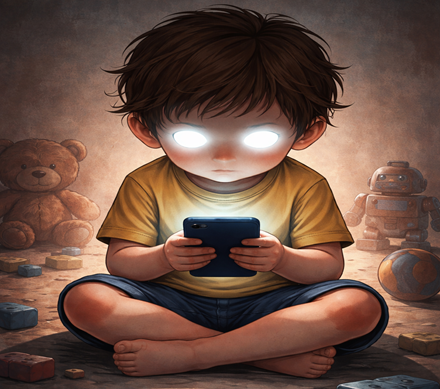
This community service program aimed to reduce tantrum behavior in early childhood children who were dependent on gadget use. A total of 20 children aged 4–6 years in Polewali Mandar Regency participated in this program. The intervention was conducted through play therapy over a three-week period, with a frequency of two sessions per week, resulting in a total of six sessions. The activities included coloring, role-playing, ball games, and making and flying paper planes. Observational results showed that prior to the intervention, the frequency of tantrums ranged from 2–3 times per day with a duration of 6–10 minutes. After the intervention, the frequency decreased to 0–1 times per day with a duration of 1–3 minutes. In addition, the children demonstrated improvements in focus, emotional regulation, and social interaction with their surroundings. This program indicates that play therapy is an effective, simple, and enjoyable strategy for reducing tantrum behavior in early childhood related to gadget use.
Downloads
References
Abdi, F., Karamoozian, A., Lotfilou, M., Gholami, F., Shaterian, N., Niasar, A. A., Aghapour, E., & Jandaghian-Bidgoli, M. (2025). Effect of play therapy and storytelling on the anxiety level of hospitalized children: a randomized controlled trial. BMC Complementary Medicine and Therapies, 25(1), 23. https://doi.org/10.1186/s12906-025-04767-4
Andika Sari, D., Damayanti, A., Bahfen, M., & Zulhaini, L. (2024). Parental Education and Gadget Knowledge: Their Impact on Gadget Use Behavior in Children Aged 5-6 Years. Golden Age: Jurnal Ilmiah Tumbuh Kembang Anak Usia Dini, 9(1`), 171–180. https://doi.org/10.14421/jga.2024.91-15
Benu, J. M. Y. (2023). Emotional Regulation Play Therapy for Maltreated Children: A Single Case Study. Journal of Health and Behavioral Science, 5(2), 172–181. https://doi.org/10.35508/jhbs.v5i2.3639
Chauhan, N., Sachdeva, D., Malhotra, S., & Gupta, N. (2024). Play Therapy: An Analytical Mode of Therapy in Children. Journal of Indian Association for Child and Adolescent Mental Health, 20(2), 136–146. https://doi.org/10.1177/09731342241238524
Dewi, G. A. N. T. (2020). The Effectiveness of Play Therapy and Positive Reinforcement to Reduce Gadgets Addiction in Children. Proceedings of The ICECRS, 8, 5–9. https://doi.org/10.21070/icecrs2020419
Drake, J. E. (2021). How Drawing to Distract Improves Mood in Children. Frontiers in Psychology, 12(February), 1–12. https://doi.org/10.3389/fpsyg.2021.622927
Fitzpatrick, C., Binet, M.-A., Harvey, E., Barr, R., Couture, M., & Garon-Carrier, G. (2023). Preschooler screen time and temperamental anger/frustration during the COVID-19 pandemic. Pediatric Research, 94(2), 820–825. https://doi.org/10.1038/s41390-023-02485-6
Landreth, G. L. (2012). Play Therapy. Routledge. https://doi.org/10.4324/9780203835159
Li, Y. (2024). Children’s development in the digital age: impact of technology, family, and pandemic on education and well-being. Early Child Development and Care, 194(13–14), 1245–1250. https://doi.org/10.1080/03004430.2024.2440687
Lieneman, C., Brabson, L., Highlander, A., Wallace, N., & McNeil, C. (2017). Parent–Child Interaction Therapy: current perspectives. Psychology Research and Behavior Management, Volume 10, 239–256. https://doi.org/10.2147/PRBM.S91200
Perzolli, S., Bertamini, G., de Falco, S., Venuti, P., & Bentenuto, A. (2020). Emotional Availability and Play in Mother–Child Dyads with ASD: Changes during a Parental Based Intervention. Brain Sciences, 10(12), 904. https://doi.org/10.3390/brainsci10120904
Prutipaisan, W., Chunsuwan, I., Hansakunachai, T., & Sritipsukho, P. (2025). Characteristics of temper tantrums in 1–6-year-old children and impact on caregivers. Clinical and Experimental Pediatrics, 68(2), 170–177. https://doi.org/10.3345/cep.2024.00766
Robinson, L. E., Veldman, S. L. C., Palmer, K. K., & Okely, A. D. (2017). A Ball Skills Intervention in Preschoolers. Medicine & Science in Sports & Exercise, 49(11), 2234–2239. https://doi.org/10.1249/MSS.0000000000001339
Schneider, M., Falkenberg, I., & Berger, P. (2022). Parent-Child Play and the Emergence of Externalizing and Internalizing Behavior Problems in Childhood: A Systematic Review. Frontiers in Psychology, 13(May), 1–13. https://doi.org/10.3389/fpsyg.2022.822394
Selak, M. B., Merkaš, M., & Žulec Ivanković, A. (2025). Effects of Parents’ Smartphone Use on Children’s Emotions, Behavior, and Subjective Well-Being. European Journal of Investigation in Health, Psychology and Education, 15(1), 8. https://doi.org/10.3390/ejihpe15010008
Yusup, R. M., & Wati, E. (2024). The Effect Of Gadget Use Intensity On Emotion Regulation In Elementary School-Age Children. Eduhealth, 15(04), 1377–1384. https://doi.org/10.54209/eduhealth.v15i04
Downloads
Published
How to Cite
Issue
Section
License
Copyright (c) 2025 Jurnal Pengabdian Masyarakat JUPEMANDO

This work is licensed under a Creative Commons Attribution-ShareAlike 4.0 International License.